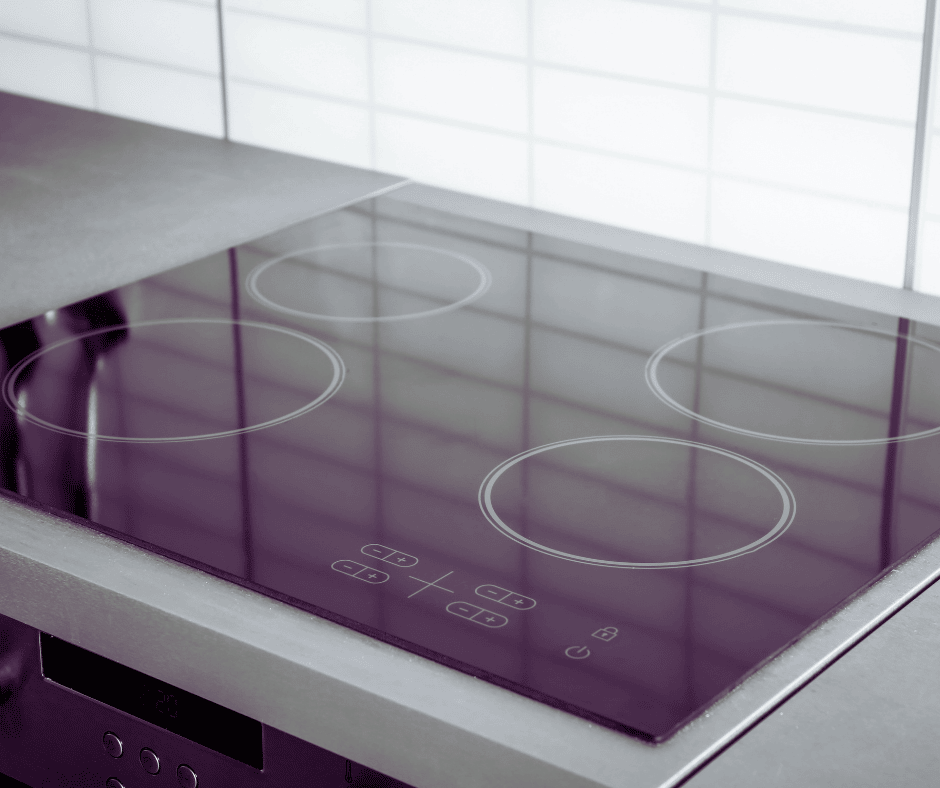
A substantial share of Des Plaines homes built between 1950 and 1985 still operate electric stoves on their original 240V receptacles, which have accumulated 40 to 75 years of plug insertion cycles, thermal stress, and oxidation. This receptacle wear is the single most common cause of electric stove "won't heat" failures in older Des Plaines housing stock and is widely misdiagnosed as heating element failure.
Electric stove receptacles installed in Des Plaines homes before 1996 are typically three-wire NEMA 10-50 designs rather than the four-wire NEMA 14-50 receptacles required for new construction today. Three-wire installations remain legal under grandfather provisions but introduce specific failure patterns when paired with newer four-prong stoves through pigtail conversion kits.
A worn 240V receptacle can deliver 228V or even 217V under load while still appearing normal to the naked eye. The voltage drop is enough to make a 2,400-watt heating element feel sluggish or fail to glow entirely, but it cannot be detected without a multimeter reading at the outlet during stove operation. This is why visual inspection of the receptacle alone is not a reliable diagnostic.
Des Plaines housing stock is mature. The city sits across 14.4 square miles of Cook County's northwestern corridor with a population near 58,010 and approximately 25,741 housing units. A substantial share of the single-family homes across Cumberland, Apollo, Oakton Manor, Parkwood Estates, Forest View, and Riverview were built between 1950 and 1985. Median home value sits at approximately $347,287 with a mature owner-occupied profile, which means many of these homes have had two, three, or four electric ranges installed across their service life on the same original 240V circuit.
The 240V receptacle that powers an electric stove is rated for tens of thousands of plug insertion cycles under normal use. In practice, most receptacles installed in 1955 or 1968 or 1974 have not been replaced when the stove was replaced. A homeowner buys a new GE Profile range in 2008, a technician installs it, the new range plugs into the existing forty-year-old receptacle, and the receptacle inherits another fifteen years of thermal cycling, plug insertion when the stove is pulled out for cleaning, and the steady current draw that an electric range demands. By 2026 that receptacle has accumulated seven decades of mechanical and electrical stress.
The failure mode is gradual rather than catastrophic. Receptacle terminals oxidize. Spring tension in the contact blades weakens. Carbon buildup from minor arcing accumulates. The connection between the stove's plug prongs and the receptacle terminals becomes intermittent. One leg of the 240V circuit (the stove uses two 120V hot legs to make 240V) starts delivering 117 volts instead of the expected 120 volts. The voltage drop is invisible to the homeowner but the heating elements feel it immediately because element resistance was engineered for full voltage. A burner that should pull 2,400 watts pulls 2,250 watts and heats noticeably slower. A burner that should heat at all does not heat because the voltage at one leg has fallen below the threshold the element needs to glow.

The most common misdiagnosis is element failure. A homeowner sees one burner not heating, assumes the heating element is the problem, replaces the element, and discovers that the new element behaves the same way. The element was working. The receptacle was not delivering full voltage to that specific terminal in the stove's terminal block.
The second most common misdiagnosis is breaker failure. The homeowner notices the stove behaving erratically, checks the breaker panel, sees the double-pole breaker still in the on position, and assumes the breaker is fine. In reality the breaker may be fine while the receptacle downstream of the breaker is the bottleneck. A multimeter reading at the receptacle terminals will show the voltage drop that the breaker reading does not.
The third misdiagnosis pattern is surface element switch confusion. When voltage drops on one leg, the burners that draw from that leg behave inconsistently. The homeowner may see two specific burners failing while the other two work, which mimics surface element switch failure or surface element board failure. The actual cause is upstream at the receptacle, but the symptom presents as a control component problem.
A fourth pattern shows up as breaker tripping. As receptacle terminals degrade, the loose connection generates heat. Heat causes further oxidation. Eventually the connection arcs intermittently, which can trip a properly-functioning breaker even though the appliance and the wiring are not at fault. Homeowners reset the breaker, the stove works for an hour, and the breaker trips again. The reflexive response is to assume the breaker is bad. The actual culprit is still the worn receptacle.
Pull a 1965 Apollo neighborhood electric range away from the wall and the receptacle behind it tells the story. Many original Des Plaines stove circuits used three-wire NEMA 10-50 receptacles, which were the standard until the 1996 National Electrical Code update mandated four-wire NEMA 14-50 grounded receptacles for new construction. A 60-year-old home with original wiring and an original three-wire receptacle is functioning legally under grandfather provisions but has the older receptacle design with no separate ground conductor.
When a newer four-prong stove is installed in a three-wire receptacle home, the typical installation uses a three-wire pigtail kit on the new stove with a bonding strap that ties neutral and ground together inside the stove. This works under code when the original wiring is sound. It introduces failure points when the original wiring has degraded. Loose bonding straps, corroded ground paths, and undersized neutral conductors all manifest as intermittent stove behavior that a homeowner reads as appliance failure.
The receptacle itself is often mounted in a junction box that has not been opened in decades. Wire nuts inside the box may have backed off due to thermal cycling. Aluminum-to-copper transitions in 1960s and 1970s wiring (where aluminum branch circuits were common before the recall) develop oxidation at the junction that limits current flow. Insulation on conductors near the receptacle can become brittle and crack under the heat the receptacle generates during normal stove operation.
The wiring path from the breaker panel to the receptacle is also relevant. Many original Des Plaines stove circuits ran 6-gauge copper wire (rated for 50 to 60 amps depending on insulation type) through walls, ceilings, and floor cavities for distances of 30 to 60 feet. Splices made along that path during renovations, additions, or repairs introduce contact resistance that worsens with age. The cumulative voltage drop across a 50-foot run with two splices and a worn receptacle can take a 240V circuit down to 232V or lower under load, which is enough to noticeably affect heating performance even when no single component has fully failed.
A proper electric stove diagnostic in an older Des Plaines home does not start at the heating element. It starts at the breaker panel and traces the circuit forward. A technician opens the panel, identifies the double-pole breaker for the range circuit, measures voltage across the two hot legs at the breaker output (expected reading 240V plus or minus 5 percent), and confirms the breaker is delivering full voltage. The reading at the breaker rules out problems upstream and isolates the diagnostic to the wiring path and the receptacle.
The technician then measures voltage at the receptacle with the stove unplugged and again with the stove plugged in and a high-load burner active. A receptacle reading 240V unloaded but dropping to 228V under load indicates terminal connection resistance that needs replacement. Thermal imaging of the receptacle box during operation reveals hot spots at degraded terminals that visual inspection alone may miss. Inspection of the receptacle terminals after de-energizing the circuit confirms whether oxidation, carbon buildup, melted insulation, or blade tension loss is the specific failure point.
If the receptacle is the problem, replacement is straightforward and code-compliant. A new NEMA 14-50 four-wire receptacle, a new junction box if the existing box shows heat damage, and proper torque specification on the terminal screws (typically 25 to 35 inch-pounds depending on the receptacle manufacturer) restore full voltage delivery. If the wiring path itself shows damage, replacement of the affected segment may be warranted.
Only after the wiring and receptacle path is verified does the technician assess the appliance itself. With a confirmed 240V supply, a heating element that does not heat is genuinely a heating element problem. A surface element switch that fails to deliver power to the element with full input voltage is a switch problem. A surface element board that fails to relay current to two burners simultaneously is a board problem. The diagnostic order matters because diagnosing the appliance before verifying the supply produces false answers.
Whirlpool electric ranges from the 1970s and 1980s are common across Des Plaines older housing stock and present specific failure patterns when paired with worn wiring. The Whirlpool terminal block design uses screw-down lugs that loosen over decades of thermal cycling, and a stove that has been pulled out for cleaning multiple times can develop loose lug connections inside the stove that compound the receptacle wear problem.
GE and Hotpoint electric ranges from the same era use a similar terminal block layout but with different lug torque specifications. GE Profile and GE Cafe ranges installed in the 2000s and 2010s in older Des Plaines homes inherit the legacy receptacle problem when the receptacle was not upgraded at the time of stove replacement.
Frigidaire and Frigidaire Gallery electric ranges are common across Des Plaines neighborhoods with mid-century housing stock. The Frigidaire surface element board design is sensitive to voltage drop, and a Frigidaire range running on a worn receptacle often presents as surface element board failure when the underlying issue is the supply voltage.
Kenmore ranges (manufactured by Whirlpool, Frigidaire, or LG depending on model year) follow the manufacturing source's failure patterns. A 2005 Kenmore is likely a Whirlpool internally and behaves like a Whirlpool when paired with worn wiring. A 2018 Kenmore Elite is often an LG internally with corresponding diagnostic patterns.
KitchenAid, Maytag, and Amana ranges (all part of the Whirlpool family since the 2006 acquisition) share the Whirlpool platform and the corresponding wiring sensitivity patterns. Bosch electric and induction ranges in newer Des Plaines installations are more demanding on supply voltage because the induction power electronics require clean 240V to function within specification, and a Bosch induction cooktop on a marginal receptacle will throw error codes that look like induction module failure when the actual problem is upstream.
Average electric stove repair Des Plaines IL runs $108 to $251 per current Angi market data, with typical diagnostic fees in the $75 to $100 range. Receptacle replacement adds parts cost (a quality NEMA 14-50 receptacle runs $25 to $60 retail) plus labor for the wiring work. A typical receptacle-only repair on an accessible installation runs $200 to $400 total when a technician identifies the problem on the first visit and completes the work the same day. When the wiring fault has already damaged the bake element, oven control board, or temperature sensor, the same diagnostic visit can roll into oven repair on the same trip, which avoids a second service call charge and keeps the kitchen functional within the same day.
Wiring path repairs are more variable. A single splice rebuild may add $100 to $200. A full circuit rewire from breaker panel to receptacle on a long run runs $400 to $800 depending on distance, accessibility, and whether drywall repair is needed. The 50 percent rule applies to the appliance itself rather than the wiring. If a stove repair plus a receptacle replacement totals 40 percent of new stove replacement cost, the repair makes financial sense. If the repair totals 60 percent or more, replacement becomes the better path.
The hidden value of fixing the wiring rather than just the appliance is that the same receptacle will fail again with the next stove if it is not addressed now. Homeowners who replace the heating element, get six months of normal operation, and then experience the same symptom on a different burner are paying twice for what should have been a single comprehensive repair.
Worn receptacles are not the only wiring issue affecting older Des Plaines electric stoves. Stove terminal blocks inside the appliance corrode over time, particularly in homes near the Des Plaines River where ambient humidity is higher. The terminal block is the connection point between the stove's power cord and the internal wiring harness, and corrosion at this junction produces voltage drop that mimics receptacle wear.
Power cord degradation is common on stoves that have been pulled out and pushed back repeatedly for cleaning. Cord insulation cracks at the strain relief, internal conductors break inside the cord jacket, and the cord becomes the bottleneck even with a good receptacle and good terminal block. A power cord replacement runs $40 to $80 in parts plus labor and is often the cheapest fix when the cord is the actual problem.
Aluminum branch circuit wiring shows up in some Des Plaines homes built between 1965 and 1973, when aluminum was used as a copper substitute during a copper price spike. Aluminum-to-copper transitions at receptacles, breakers, and junction boxes require specific anti-oxidation compound and connection methods that were not standard practice at the time. Aluminum wiring remediation in Des Plaines older homes is a specialty service that combines electrical work with appliance impact assessment.
Subpanel and breaker panel issues affect a smaller share of cases but are worth ruling out. A double-pole breaker that has lost spring tension on one pole delivers half voltage to the stove even when the breaker appears to be in the on position. A panel bus bar with corrosion at the breaker contact point produces the same symptom. Panel-level diagnostics are part of a complete electric stove diagnostic when receptacle replacement does not resolve the problem.
A scheduled service call from Unique Repair Services Inc. for an electric stove problem in Des Plaines starts with a dispatched technician arriving in a stocked service vehicle within the agreed appointment window. The technician asks the homeowner to demonstrate the symptom, observes the stove in its actual installed condition, and begins diagnostics from the breaker panel forward.
The diagnostic phase typically runs 30 to 60 minutes depending on complexity. If the problem is at the receptacle and the technician carries the right replacement part on the truck, the repair is often completed on the same visit. Common Des Plaines stove brand parts (Whirlpool surface element switches, GE Profile control boards, Frigidaire heating elements, Kenmore terminal blocks) are typically stocked on the service vehicle to support same-day completion.
If the problem is more complex (full circuit rewire, panel work, aluminum wiring remediation), the technician provides a written estimate, schedules a follow-up visit with the right materials, and coordinates with the homeowner on access and timing. The diagnostic fee paid on the first visit applies to the final repair bill, which means the homeowner does not pay twice for the technician's time when the work spans two visits.

Unique Repair Services Inc. serves Des Plaines from 95 Bradrock Dr in zip 60018, with full coverage of the 60016, 60017, 60018, and 60019 zip code grid plus adjacent Cook County suburbs including Park Ridge (60068), Mount Prospect (60056), Niles (60714), Glenview (60025), Rosemont, Elk Grove Village (60007), and Arlington Heights (60005). Local family-owned operation with multi-decade Cook County operational experience. Factory-authorized service across Whirlpool, GE, Frigidaire, Maytag, Kenmore, KitchenAid, LG, Samsung , Bosch, Electrolux, Sub-Zero, Wolf, Viking, Thermador, Miele, Jenn-Air, Dacor, and Fisher and Paykel. Manufacturer-trained technicians. Licensed Illinois contractor. Fully insured. Same-day and next-day appointment availability. Diagnostic fee applied to the final repair bill on completed jobs. Parts warranty. Workmanship warranty on installation labor. Stocked service vehicles carrying common parts for same-visit repair completion across Whirlpool, GE, Frigidaire, Maytag, Kenmore, and KitchenAid electric stoves. Call (847) 318-3363 to schedule electric stove service for older Des Plaines homes across Cumberland, Apollo, Oakton Manor, Parkwood Estates, Forest View, Riverview, Lake Park, and Downtown Des Plaines.
Redirect to: